

Haz una donación
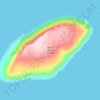
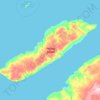
Mapa topográfico Mount Odin
Haga clic en el mapa para ver la altitud.
Haz una donación
Mount Odin
Mount Odin is the highest mountain within the Baffin Mountains as well as the fifth-highest in the Arctic Cordillera. It has a topographic prominence of 2,147 m (7,044 ft), greater than any other mountain within the Baffin Mountains and on Baffin Island, making Odin the third-highest mountain in Nunavut by topographic prominence. Comparing absolute peaks, Mount Odin is the fifth-highest in Nunavut. The higher points in Nunavut are: Barbeau Peak on Ellesmere Island (the highest point in Nunavut at 2,616 m), two unnamed peaks on Ellesmere Island, (one at 2,347 m located at 78° 48' N, 79° 34' W and one at 2,201 m located at 80° 17' N, 75° 05' W) and Outlook Peak on Axel Heiberg Island, which at 2210 m is just 63 m higher than Mount Odin.
Haz una donación
Acerca de este mapa

Nombre: Mapa topográfico Mount Odin, altitud, relieve.
Lugar: Mount Odin, Qikiqtaaluk Region, Nunavut, Canada (66.54691 -65.42656 66.54701 -65.42646)
Altitud media: 1.440 m
Altitud mínima: 735 m
Altitud máxima: 2.131 m
Haz una donación
Otros mapas topográficos
Haga clic en un mapa para ver su topografía, su altitud y su relieve.
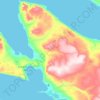
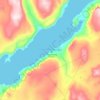
Arctic Bay
Canada > Nunavut > Qikiqtaaluk Region
Arctic Bay experiences a tundra climate (Köppen: ET) like most northern Canadian territories at low elevations, with long, very cold winters and short, cool to cold summers. July is the only month with an average low temperature above freezing. Its climate does not differ from the more severe subarctic…
Altitud media: 160 m
Haz una donación
Haz una donación

Haz una donación
Haz una donación
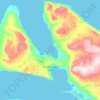
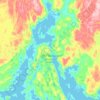
Arctic Bay
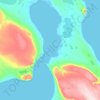
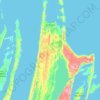
Canada > Nunavut > Qikiqtaaluk Region
Arctic Bay experiences a tundra climate (Köppen: ET) like most northern Canadian territories at low elevations, with long, very cold winters and short, cool to cold summers. July is the only month with an average low temperature above freezing. Its climate does not differ from the more severe subarctic…
Altitud media: 137 m


Haz una donación
Haz una donación


Haz una donación


Haz una donación
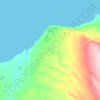
Arctic Bay
Canada > Nunavut > Qikiqtaaluk Region
Arctic Bay experiences a tundra climate (Köppen: ET) like most northern Canadian territories at low elevations, with long, very cold winters and short, cool to cold summers. July is the only month with an average low temperature above freezing. Its climate does not differ from the more severe subarctic…
Altitud media: 137 m


Haz una donación


Haz una donación


Haz una donación